
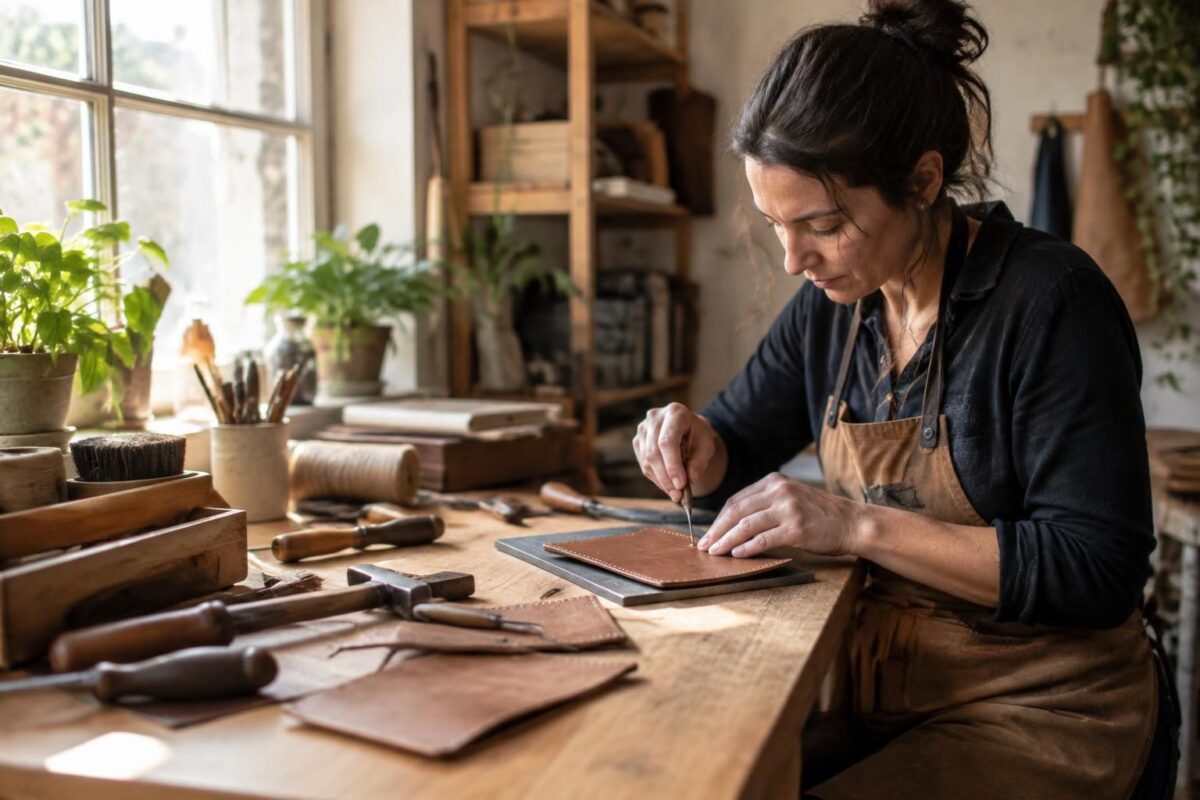
Crafts: What business can you start with limited funds?
Hello, this is Patrick.
With limited resources, clothing alterations, bicycle repairs, and jewelry making are among the easiest crafts to try out.
In the crafts industry, the right choice depends mainly on your manual skills, the equipment you already have, and the needs in your area. The goal: start small, check whether customers are willing to pay, then invest at the right time.
Things to do now
- List your skills: sewing, assembling, repairing, painting, or making crafts.
- Identify a local need: clothes that need altering, bicycles that need servicing, or personalized gifts.
- Choose a specific offer: for example, altering pants rather than offering “all kinds of sewing work.”
- Calculate your startup budget, separating tools, materials, and administrative costs.
- Try making your first sale to people you know or at a market, without buying a large amount of stock.
To build a profitable business, also consider the value of your time and actual demand. These tips on structuring a profitable craft business and this look at how low prices wear artisans out can help you lay a solid foundation.
Which craft requires the least investment?
There is no single craft that is universally the cheapest to start: it all depends on the equipment you already own and the space you have available. A service business such as clothing alterations can be started with a sewing machine and a few supplies, while making products often requires buying raw materials before you can sell anything.
As a rough guide, an initial trial may cost anywhere from a few dozen to a few hundred euros for consumables or small tools. Don’t treat this estimate as a fixed budget: professional equipment, premises, or specific insurance can increase the cost.
| Craft | Initial equipment | Why try it | What to watch out for |
|---|---|---|---|
| Clothing alterations and textile repairs | Sewing machine, thread, needles, scissors | You can start at home and sell a local service | Factor in the time involved when setting a viable price |
| Jewelry and small accessories | Pliers, findings, and small quantities of materials | Making crafts allows you to create a few test designs | Avoid building up stock before you have orders |
| Bicycle repairs | Basic tool kit and common replacement parts | A local service can build customer loyalty among residents | You need to know how to diagnose problems and carry out repairs safely |
| Decorative objects made from reclaimed materials | Low-cost tools, reclaimed materials, and suitable protective gear | You can make items to order and limit purchases | Check the quality and time required for each piece |
Sewing and small creative products are often suitable for a first try at home. Bicycle repairs can also be started without a shop, provided you know how to carry out the services you offer and have a suitable workspace.
Services or making products: what should you choose to get started?
A service generally requires less stock: you buy the necessary equipment and charge for your work. This is a good option if you want to limit purchases, but your income depends on how much time you can spend serving customers.
Making products gives you more creative freedom and may let you sell the same product range to multiple people. On the other hand, raw materials, testing, and unsold items can tie up your money.
For example, Samira already owns a sewing machine. She first offers hemming and simple repairs in her neighborhood, then expands her offer with accessories made from fabric scraps. She only buys additional supplies after seeing what customers are asking for.
What to check before starting your business
A craft that is easy to start in terms of equipment is not necessarily free of obligations. Some craft activities are regulated and may require a diploma, professional experience, or suitable insurance. For example, building work requires careful checks of the relevant qualifications and guarantees.
To compare the possible paths, read this guide to changing careers to work in the crafts. If you are considering the micro-entrepreneur scheme, this overview of self-employed artisan status explains the main procedures and obligations.
The pitfall: confusing revenue with profit
As a micro-entrepreneur, your social security contributions are calculated on the revenue you receive. However, under this scheme, your business purchases are not deducted as actual expenses: a business that uses a lot of materials may therefore be less advantageous than it seems.
Before registering your business, estimate the cost of supplies, packaging, travel, and your working time. Add contributions and any other expenses to your calculations, then check that the price is still acceptable to your customers.
The scheme may be suitable if you’re starting out on your own with limited expenses, testing a low-investment business, or earning extra income. But if your project requires expensive equipment or a lot of purchases, compare the options with an adviser before choosing.
Three steps to test your craft business
- Define a focused offer. Choose one service or a few products, clearly describe what’s included, and set a price that covers your time and expenses.
- Test it with real customers. Present your offer to local residents, an association, or at a small market. Record requests, questions, and sales before expanding your range.
- Make it official and adjust. Check the rules for your craft, any required qualifications and insurance, then complete the business registration formalities that apply to your situation.
Once you’ve made your first sales, increase your purchases gradually. The best proof that a business can grow isn’t a workshop full of supplies: it’s satisfied customers who come back and recommend your work.
Questions to ask yourself before starting a craft business
What craft can you start at home with limited resources?
Clothing alterations, making small batches of jewelry, and certain decorative objects can be tried at home if you already have some of the equipment. Check the rules that apply to your activity and start with a simple offer.
Do you need a diploma to become a self-employed artisan?
It depends on the craft. Several activities are regulated and require qualifications or professional experience. Check the requirements for your specific activity with the relevant authorities before offering your services.
Is the micro-entrepreneur scheme suitable for a craft business?
It may be suitable for testing a business with low fixed costs and limited purchases. However, business expenses are not deducted as actual costs: compare this scheme with other options if your materials or investments make up a significant part of your budget.
How can you find your first customers in the crafts industry?
Start with your local network, referrals, markets, or a clear presentation of your offer online. Ask for feedback after your first orders and keep photos of your work with your customers’ permission.
Thanks for joining me this far! Your feedback and experience are always welcome. — Patrick