
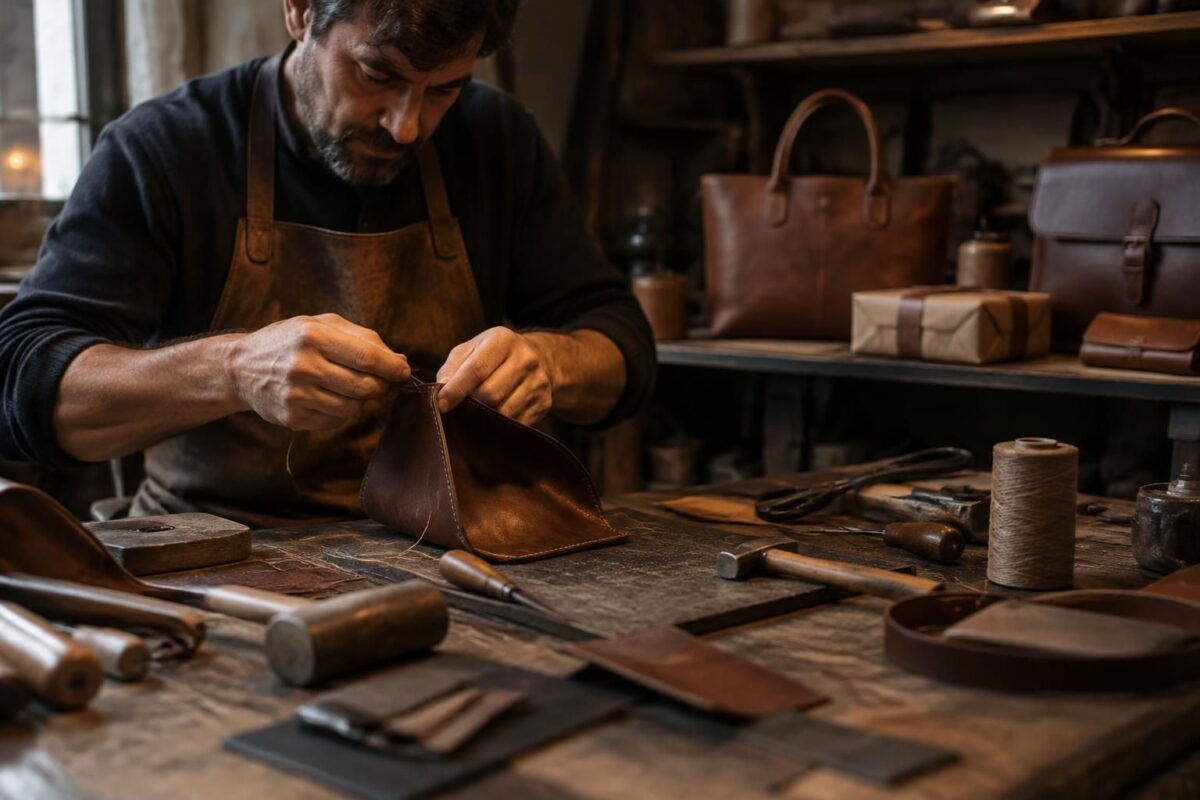
Development: this profitable craft remains invisible
Hello, Patrick here.
A profitable craft business can remain invisible when its expertise, prices, and proof of quality are not easy to find and understand.
Visibility doesn’t depend on an expensive campaign: a few clear details and genuine images can already change how customers discover a workshop.
Useful first steps
- Show your work with clear photos taken in your workshop or at your customers’ homes.
- Explain what you offer: uses, materials, options, price range, and typical lead times.
- Share your local presence with your contact details, opening hours, and a precise description of your services.
- Ask for reviews after an order or service, then respond thoughtfully.
- Post regularly about a step in the making process, a before-and-after, or a care tip.
These steps make your business easier to choose without forcing you to turn your workshop into a communications agency. To better understand the pitfalls of running a profitable craft business, also read how to avoid false-opportunity niches and explore ways to make your craft business more visible.
Why a profitable craft business can remain invisible
Excellent work doesn’t always sell itself. If a customer can’t find examples, practical information, or a quick response, they may choose a competitor whose offer seems more reassuring, even if it is less carefully made.
The problem often comes down to a disconnect: the craftsperson knows the value of their work, but visitors only see the finished product. They’re missing simple proof of how it’s made, the materials used, lead times, and repair options.
Imagine Mina, a ceramic artist: her pieces are popular in shops, but her website only shows three old photos and doesn’t explain how to order. By posting a recent collection, her work process, and the ways her pieces can be used, she helps customers understand what justifies the price.
Marketing for crafts should make value clear
Marketing for crafts doesn’t need grand promises. It’s about showing the reality of the work: the time it takes to make something, the choice of materials, the finishing, and the care put into after-sales service.
A workshop can start with a complete local business listing, a simple webpage, and a social media account used regularly. Consistency matters more than being everywhere: it’s better to keep one channel up to date than to create lots of abandoned accounts.
Make your expertise visible without discounting your prices
Being more visible doesn’t mean attracting every inquiry. Business development is useful when it brings in the right customers—those who understand the value of the work and know what they’re buying.
To do this, present an offer that’s easy to browse. An artisan can distinguish between an affordable small piece, a signature creation, and a custom order with defined options and lead times. This structure makes it easier to communicate the value of the work without making the choice complicated.
| What the customer is wondering | What proof to provide | Intended effect |
|---|---|---|
| How is this piece made? | Photos of the process and a brief explanation of the technique | Show the expertise involved |
| Why does it cost this much? | Details about the materials, time, and finish | Make the value more tangible |
| How long will I have to wait? | Stated lead times and approval steps | Reduce uncertainty before ordering |
| How do I care for or repair the item? | Usage advice and a clearly defined repair service | Build trust and support durability |
A clear presentation also improves profitability. It reduces poorly targeted inquiries, endless back-and-forth, and orders that go beyond the agreed scope. A detailed quote, with options and terms, protects the workshop’s time as well as the customer relationship.
Three steps to build your visibility
- Choose a priority offer. Define the type of customer you want to reach, the need you address, and what sets your creation or service apart.
- Gather proof. Prepare a few recent photos, a customer testimonial, and a concrete explanation of the materials, process, or lead times.
- Track valuable inquiries. Note where they come from, how many quotes are accepted, and how much time you spend communicating. Then adjust your communications based on what actually converts.
This approach supports gradual growth: test a presentation, observe the response, then improve what isn’t working. In 2026, digital visibility has become an essential point of contact, but it doesn’t replace quality work or local recommendations.
Make visibility a driver of sustainable growth
Small craft businesses often have little time to devote to communications. So prioritize content that serves several purposes: a photo of the making process can be used on a product page, in a local post, and in response to a frequently asked question.
Being consistent doesn’t mean posting every day. A short demonstration, a before-and-after, or a care explanation every week or two may be enough to keep your business in customers’ minds, as long as the information is useful and up to date.
For example, a craftsperson who makes custom furniture can show a piece in progress, specify the available wood species, and explain the production lead times. This helps customers picture the finished piece and prevents price from being the only basis for comparison.
Track a few metrics instead of chasing views
Follower counts don’t tell you whether your communications are contributing to business development. Instead, track qualified inquiries, workshop visits, accepted quotes, and average order value.
If your photos attract attention but generate no inquiries, add practical information or an easy way to request a quote. If inquiries are pouring in but regularly exceed your capacity, specify lead times and set clearer limits on the options you offer. Good visibility attracts customers who are a good fit for your actual business.
Protect profitability by making your offer clearer
Growth doesn’t necessarily mean more orders. A better-defined offer can improve margins by reducing unnecessary travel, unpaid variations, and time spent explaining the same things over and over.
Before launching a new range or campaign, check the production time, material costs, and related expenses. A much-loved creation can still be unprofitable if its price doesn’t cover the hidden steps: preparation, communication, packaging, and follow-up.
Visibility then becomes a way to filter customers: it clearly shows what you offer, who it’s for, and what the customer can expect. This transparency supports craft entrepreneurship without erasing what makes the work unique.
How can you make a craft business visible on a small budget?
Start with a complete local business listing, recent photos of your work, and a clear presentation of lead times and ordering. Regularly post concrete proof rather than expensive advertising messages.
What content best showcases craft skills?
The stages of making, finishing details, before-and-after photos, and care tips make the work easier to understand. Choose examples that answer questions your customers often ask.
How can you tell whether visibility is improving profitability?
Track where inquiries come from, how many quotes are accepted, average order value, and the time spent on each order. These metrics show whether your communications are attracting customers suited to your offer.
Do you need to be present on every platform?
No. Choose the channels your customers use and that you can keep up to date. A consistent presence on a few platforms is better than lots of inactive accounts.
Thanks for reading! Feel free to share your thoughts in the comments. — Patrick